Bitumen is measured hot: at 150-180 °C viscosity still allows pumping, below 100 °C it hardly flows. The meter and piping are selected for temperature, not pipe size.
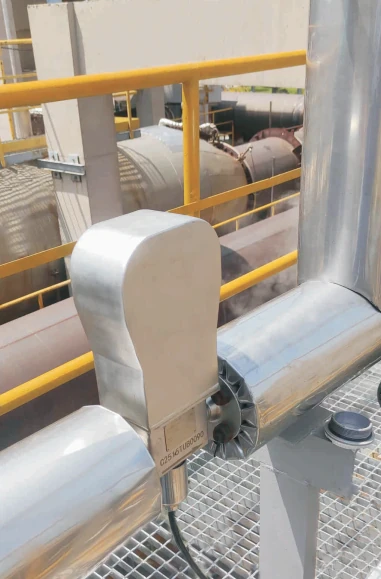
Bitumen density is about 1000-1100 kg/m³ at working temperature. Viscosity is high and rises sharply on cooling, so the line is heated along its length, including the sensor.
Deposits on tubes and in dead zones change the bore. A straight-tube sensor without bends is easier to flush and heat.
Above +150 °C execution G is required: -50 to +230 °C with remote electronics.
| Point | Flow, kg/h | DN | Execution |
|---|---|---|---|
| Truck loading | 20,000-50,000 | DN50-DN80 | G |
| Supply to mixing plant | 5,000-30,000 | DN40-DN80 | G |
| Mixer dosing | 1,000-5,000 | DN25-DN40 | G |
| Transfer from tank | 5,000-20,000 | DN40-DN50 | G |
G handles up to +230 °C and comes with remote electronics: the transmitter sits away from the hot sensor. For bitumen this is sufficient with margin.
If only transfer indication is needed, a simpler meter will do. Coriolis is used for mass and density in custody transfer.
Below 100 °C bitumen hardly flows. Working temperature is usually 150-180 °C.
G up to +230 °C with remote electronics.
Straight-tube L and continuous heating reduce the risk. Scheduled flushing is mandatory.
Yes, the meter gives density in line, showing batch deviations.
Tell us flow, pressure, temperature and DN. We will reply with a configuration and lead time.
Open configurator Request a quoteWe will contact you shortly.
To attach a completed questionnaire, please email it to mass-expert@ame-info.ru.

