Gasoline is accounted in tonnes and sold in litres. Density of 720-780 kg/m³ changes with temperature and composition, so volume conversion without actual density drifts.
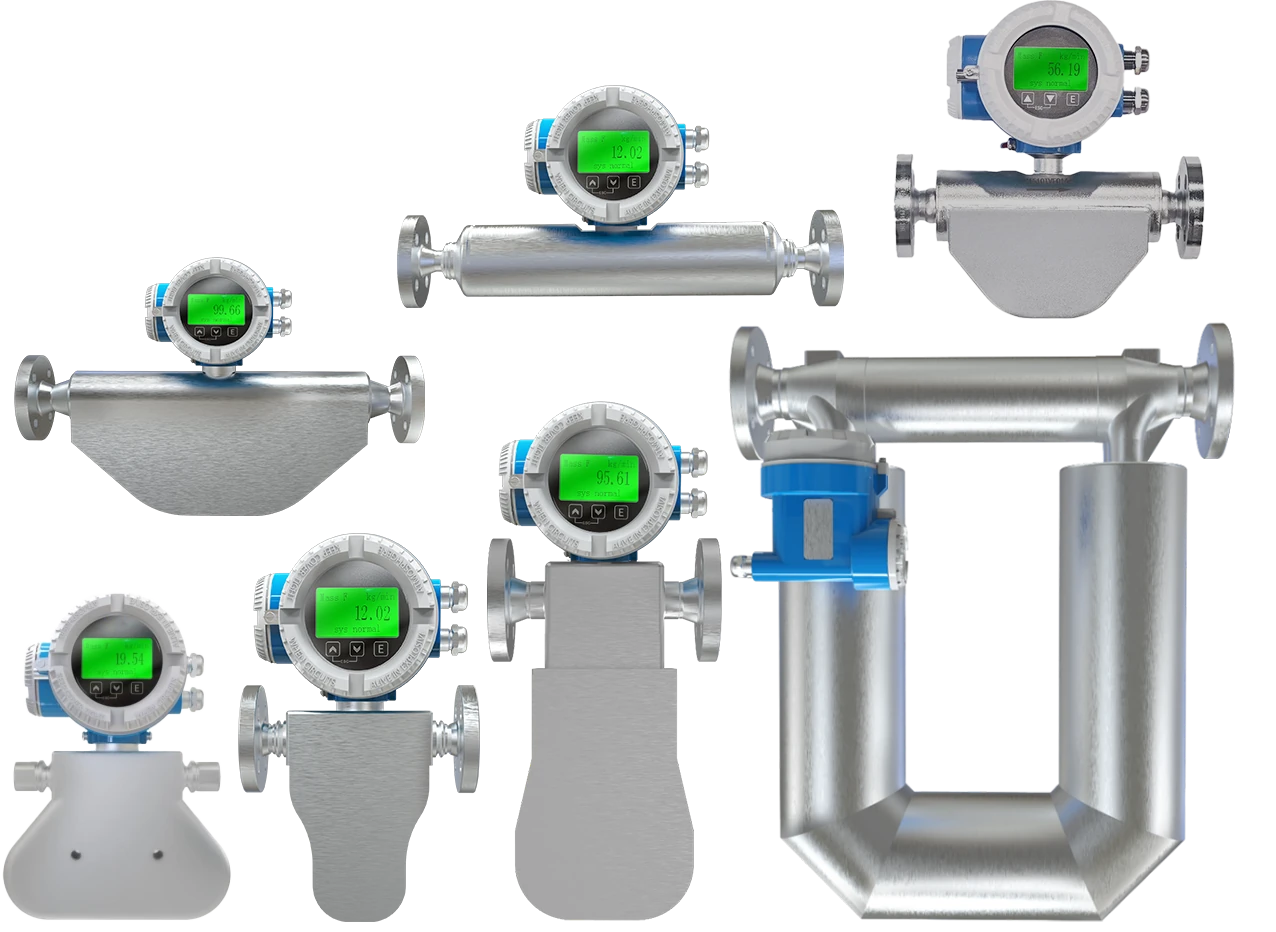
Gasoline is lighter than diesel and evaporates readily. Density is 720-780 kg/m³ at 15 °C and vapour pressure is high, so lines are kept under back pressure and the sensor is installed upstream of release points.
Gasoline does not conduct electricity. A magnetic meter does not work, and volumetric meters need density and temperature corrections.
Gasoline vapour is explosive. Ex protection, earthing and tight joints are required.
| Point | Flow, kg/h | DN | Execution |
|---|---|---|---|
| Truck loading | 20,000-60,000 | DN50-DN80 | T |
| Fuel dispenser | 5,000-15,000 | DN25-DN40 | T |
| Additive dosing | 50-1,000 | DN04-DN15 | T |
| Fuel depot metering | 5,000-30,000 | DN40-DN80 | T |
The meter measures mass, density and temperature at the same time. This gives accounting in tonnes and conversion to litres using the actual batch density, not certificate values.
If only volume at the dispenser matters and an approved density meter is available, a volumetric meter can work. For custody transfer mass is more accurate.
Gasoline does not conduct. A magnetic meter does not work on it.
DN40 handles 27,000 kg/h; 30 t/h is above its range. DN50 with 39,000 kg/h is needed.
Yes, gasoline vapour is explosive. Ex versions are available.
Yes, through density in line: volume = mass / density.
Tell us flow, pressure, temperature and DN. We will reply with a configuration and lead time.
Open configurator Request a quoteWe will contact you shortly.
To attach a completed questionnaire, please email it to mass-expert@ame-info.ru.

