Honey is thick and heavy: density 1400-1450 kg/m³, viscosity tens of times higher than water. Without heating it hardly flows, but overheating damages quality.
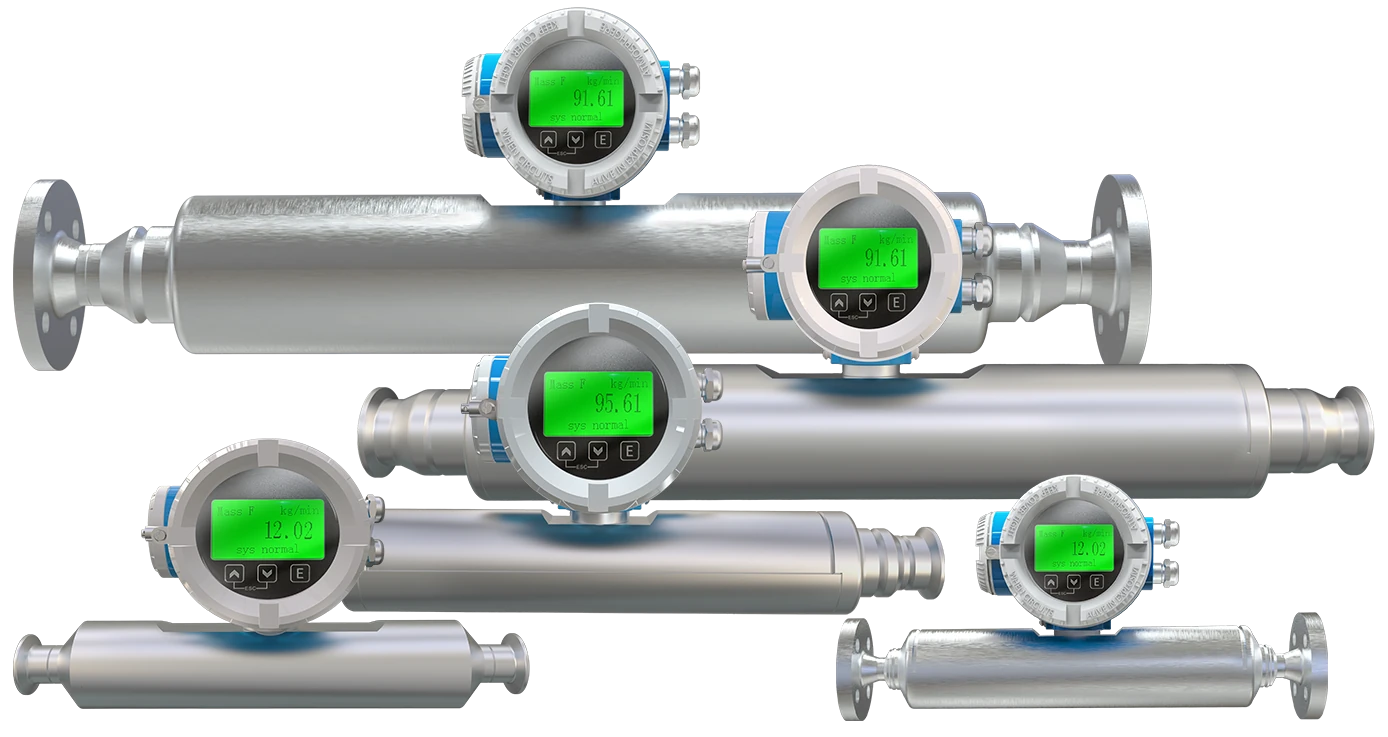
Honey density is 1400-1450 kg/m³; viscosity depends strongly on temperature and moisture. Working range is usually 40-50 °C.
Honey crystallises on storage. Crystals clog the sensor and valves, so the line is heated and flushed.
Heating above 60-70 °C degrades quality. Temperature is kept at the minimum that allows flow.
| Point | Flow, kg/h | DN | Execution |
|---|---|---|---|
| Loading | 1,000-8,000 | DN25-DN40 | T |
| Dosing | 100-1,000 | DN08-DN15 | T |
| Transfer | 500-5,000 | DN15-DN40 | T |
| Blending | 500-3,000 | DN15-DN25 | T |
L without bends heats evenly and flushes. For thick honey the diameter is chosen with margin so pressure drop stays within the pump capability.
For volume filling at stable temperature a volumetric meter will do. For mass and density Coriolis is simpler.
Overheating degrades honey quality.
Practically no: viscosity is too high.
Heating and flushing are required, otherwise the sensor clogs.
DN25 handles 12,000 kg/h; 3 t/h is 25% of span.
Tell us flow, pressure, temperature and DN. We will reply with a configuration and lead time.
Open configurator Request a quoteWe will contact you shortly.
To attach a completed questionnaire, please email it to mass-expert@ame-info.ru.

