Wine density is 990-1000 kg/m³ and depends on alcohol and sugar. A mass meter gives mass and density, so filling and transfers agree without recalculation.
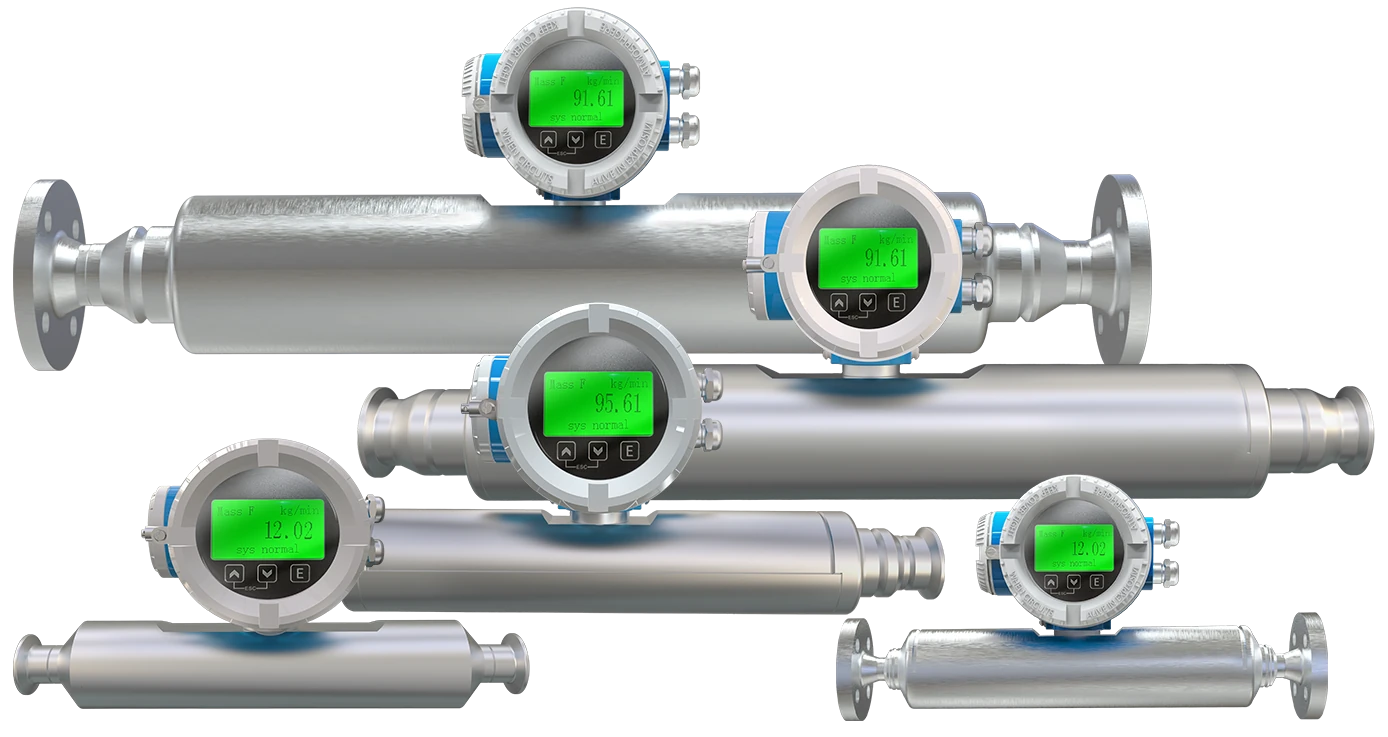
Dry wine density is about 990-1000 kg/m³; sweet wines are higher. Alcohol and sugar change density, so volumetric metering needs corrections.
Young wine keeps CO2 and suspended solids. Gas and solids disturb the flow, so the sensor goes after filtration and where back pressure is maintained.
After cleaning the line keeps water. The start of product is controlled by density.
| Point | Flow, kg/h | DN | Execution |
|---|---|---|---|
| Filling | 1,000-10,000 | DN25-DN40 | T |
| Transfer between shops | 3,000-15,000 | DN25-DN50 | T |
| Blending | 500-5,000 | DN15-DN40 | T |
| Cleaning | 1,000-10,000 | DN25-DN40 | T |
Mass does not depend on alcohol or sugar. Density in line shows when product starts after cleaning and whether the batch matches the recipe.
A level gauge is enough for tank volume. Coriolis is used for mass, filling and density control.
Yes, gas breakout makes the flow two-phase. Back pressure is required.
Yes, but solids require filtration and flushing.
DN25 handles 12,000 kg/h; 8 t/h is 67% of span, the working edge.
The start of product is controlled by density.
Tell us flow, pressure, temperature and DN. We will reply with a configuration and lead time.
Open configurator Request a quoteWe will contact you shortly.
To attach a completed questionnaire, please email it to mass-expert@ame-info.ru.

